
Dialogue Times
Articles Opinions

LOST TEMPLES OF ISLAMABAD byGulbaz Mushtaq

Part 1:

The city of Islamabad stretches between shrines of Golra and Bari Imam. Years ago, when the area was not yet baptized, it was home to dozens of scattered villages between temples of Golra, Saidpur and Rawal. In those days local Gakhar, Rajput and Malhiar tribes resided in these villages. The present day Islamabad and its denizens were yet to inherit the place. Fast forward four centuries and you will find yourself in a city called Islamabad.

The Best Social Media Site

Facelore
Own Your Own

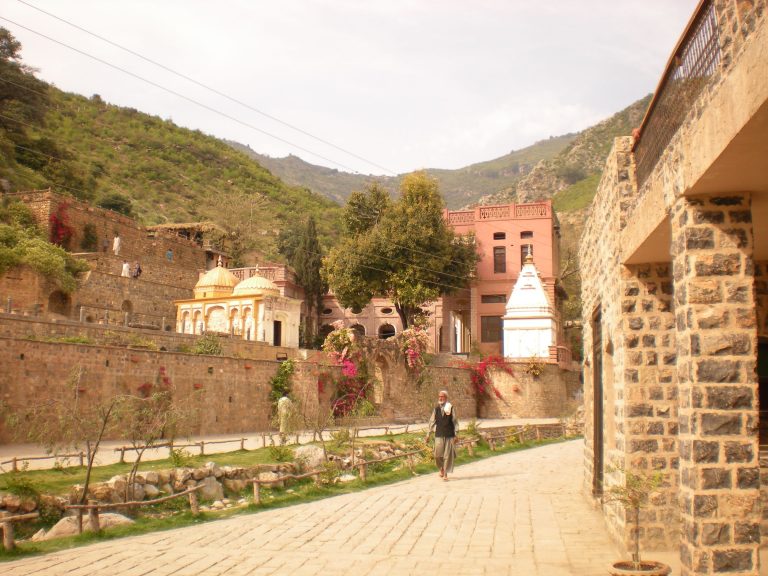
Zero kilometres away from Islamabad, the picturesque Saidpur silently sits on a slope of Margalla hills. In year 1530 AD, one Mirza Fateh Ali founded the village. Initially, it came to be known after him as Fatehpur Baoli. Later, when the area was given to Said Khan Gakhar by our very own Mughal Emperor Akbar for his family’s services in the fight against our beloved Sher Shah Suri, the name of village changed from Fatehpur to Saidpur. Said Khan gifted the village to his daughter.

The village that finds mention in Tuzk-e-Jahangiri as ‘a place beyond Rawalpindi’ has a unique attraction in its serene environment that anyone who passes by it falls in love with. Janahgir thus married the owner of the village – daughter of Said Khan. Those who consider Iqbal as a Pakistani would surely love to call Jahangir as son-in-law of Islamabad.

In 1580 AD, Maan Singh visited the village and to commemorate his visit built a temple, a dharamshala and four ponds namely Ram Kund, Lakshman Kund, Sita Kund and Hanuman Kund here. In preceding centuries, before the partition, Hindus from Rawalpindi would gather at Saidpur and celebrate Baisakhi at the temple and the ponds. As partition came by, it changed everything. Hindus inhabiting the village migrated to India so did the brass statues of goddesses of Kali and Lakshami. The ponds have disappeared and the village has been taken over by Des Pardes, Dera Pakhtoon, Andaaz, Tira and other expensive restaurants. The apron of the temple where once upper-class Hindus used to take Parsaad now serves as dining place of Des Pardes, a high-end restaurant, catering to elites only. And the temple, empty and in shambles, stands ready for a selfie with the visitors.

Alongside the temple, a gurdwara was built by Sikhs, probably in the twentieth century. Attached to the gurdwara is a big-size room which served as school for teaching philosophy of Guru Nanak. Until partition, Waheguru and goddesses of Kali and Lakshami resided side by side. Once the land of the pure became a reality, Sikh school was converted into Primary School for Girls for teaching Two Nation Theory. As the village was declared tourist place in 2006, the girls’ school ceased to exist. It has now been renovated and carries black and white photos of Islamabad’s making and the lost temple.

Some local Gakhar and Rajput families still reside in the village. Ironically, they are considered ‘Raja Ji’ and not ‘actual Islamabadis’.

The author is a lawyer based in Islamabad . He is partner at Just & Right Law Company. He can be reached at gulbazmushtaq@justnright.com

Courtesy: daily times


Related posts

What, the hell, does „odd” mean? by HILDE JACOBS

Dialogue Times

Aging, Hairloss & Captain

Dialogue Times

Logic of Politics and Governance in Punjab by ASAD UR REHMAN

Dialogue Times

Religious Fanaticism

Dialogue Times

“The Western trio in Syria – The history repeats itself and the cycle goes on” by Afshan Bangash

Dialogue Times

Feminism: A movement to end sexism I don’t know why a lot of people are afraid of women’s and girls’ rights. So many people send me messages on messenger not to speak for (بے حیائی). Demanding equal rights for the oppressed women is not (بے حیائی). This is the fight against harassment. And dear men, harassment isn’t confined to work place only. Women & girls are even harassed in the so-called educational institutions by the educated misogynists. Can you identify an organisation, university, or any other social platform that ensures or provides safe environment to girls & women? The answer is surely No. The problem with a lot of people who call themselves so-called feminists is that they misunderstand the meaning of feminism. Feminism is the belief in social, economic and political equality of the sexes. In other words, feminism is a movement to end sexism. There are a lot of reasons of harassment that women go through. Among them, the primary one is the patriarchal society. A society where men are dominant. Patriarchy cannot be eradicated completely. However, we can struggle to fight for the rights of women by educating our youth. People ask for girls education. Girls are already pursuing education in different institutions. The problem is that they are repeatedly harassed by the nasty patriarchal mindsets that exist here. Unless we endeavour to end the system that prejudices people based on their sexes, we cannot think of a safe environment for our mothers & sisters at any type of work place. Remember, book reading plays a pivotal role in this regard. Majority of our youth are not truly sincere with themselves. Being a student of honors at Balochistan University Of Information Technology Engineering And Management Sciences (BUITEMS), I see a lot of youth in university sitting in different canteens, waisting their time being indulged in useless conversations with each other. Most of the students are concerned about marks. Getting a desired CGPA satisfy them. Majority of the students say that they just attend classes for the sake of passing time. However, there are very few ones who come to university with full enthusiasm and are truly sincere with their studies. They are the real ones who realise the importance of girls & women in this world. Apart from teaching text books, our teachers should also promote the importance of reading researched books. Teachers can play a significant role in promoting book reading culture. They can help our youth how to think critically, and how to take critical approache while reading something. Let’s not squander our time. Let’s struggle to ensure a better and safe environment to our sisters. Let’s struggle to fight for the rights of oppressed ones. Unless we the youth come out of our comfort zones and take the primary responsibility of educating each other through promoting the book reading culture, we cannot think of a better and prosperous society.

Dialogue Times

Leave a Comment

Dialogue Times uses cookies to improve your experience. We'll assume you're ok with this, but you can opt-out if you wish. Accept Read More