
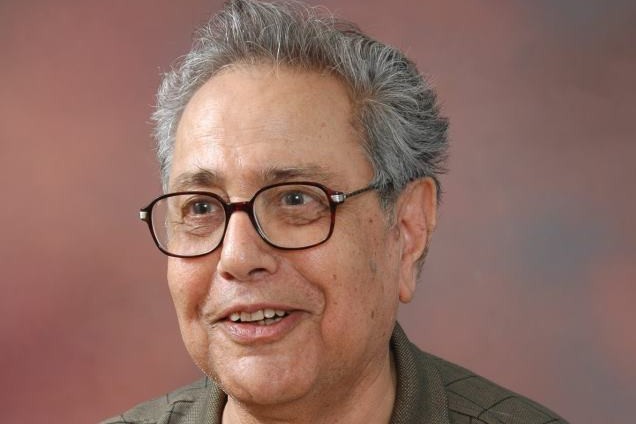
Dr. Satyapal Anand
The Best Social Media Site

Indeed, I have read so many books on the Muslim renaissance in India from the nineteenth century to the inception of the idea of Pakistan that any new book on the subject seems an unnecessary addition to a fat corpus of historical or semi-historical material on the subject. So when the Urdu book titled “Sir Sayyed se Iqbal Tak (Urdu) سر سید سے اقبال تک (published almost a decade ago) reached my desk through the good offices of a columnist friend in Lahore, I put my other reading apart and took it up for reading as my first preference. I have read it now, assiduously highlighting paragraphs, marking references and checking bibliography that runs into 422 entries. It is written by Qazi Javed, a disciplined scholar who has a researcher’s mind for precision. Myself a university professor, I can see 90% perspiration and 10% inspiration in this book which is a scholar’s high watermark in research.
In the period between Sir Sayed and Iqbal, there have been a dozen or more Muslim scholars, writers and spiritual leaders who shaped the history of Indian Muslims. There are, for example, Maulvi Chiragh Ali, Sayed Amir Ali, Shibli Ne’mani, Maulana Ubaidullah Sindhi and Maulana Abul kalam Azad, to name a few. (مولوی چراغ علی، سید امیر علی، شبلی نعمانی، مولانا عبیداللہ سندھی، اور مولانا ابوالکلام آزاد)
After the debacle of the first war of independence in 1857 and the British highhandedness against the Muslims of North India, there was a widespread air of despondency, despair, and deprivation in Muslims of all hues and ethnic extractions. These leaders rose to the occasion and brought about a new awakening in them. Sir Sayed found that, alongside Muslim beliefs, education in science and technology would help re-enliven the Muslims. Others, by and large, without totally rejecting western education, helped regenerate the lost pride of the Muslims being Muslims with a great and grandiose past. Maulana Azad, a scholar par excellence, tried to bring Indian Muslims shoulder to shoulder with freedom fighters from other religions and communities.
The book contains a detailed account of the various dimensions of Sir Sayed’s movement. It has been said that while this great man’s endeavor for modern education for the Indian Muslims was a progressive step, his politics, particularly his support of the British regime, was reactionary. The author has skillfully brought these two diverse views to become congruent. Likewise, Amir Ali’s scholarly work apart, his founding of the National Mohammedan Association and its laudable efforts over half a century, have been skillfully highlighted. Mirza Ghulam Ahmad and his pro-British views have been subjected to the enquiry but the author skillfully exonerates him of the duality in his approach to the British on the subject of Muslim subjugation.
The best part of the book is about Shibli Ne’mani. His scholarly work apart, the founding of Nadwatul-Ulema ندوۃ العلما has been properly placed in his lifestyle, which, among other pursuits, includes his love letters to Attiya Begum. Ubaidullah Sindhi has all but been forgotten by the new generation of Muslims, but the able author has looked at the saga of his life, right from his diehard views against the Imperialist British, his travel to Russia and his controversial assertion that all Russians were not atheists. Now we know the truth of this statement by Maulana Sindhi. Russians did keep their Orthodox Christian faith dear to their bosoms even during the dark days of Stalin.
Lastly, a few lines about Maulana Azad and his critical appreciation in this book would not be out of place for the present reviewer. The fact that Pakistani Muslims have almost forgotten this great son of Islam and his interpretation of holy tenets is there for all of us to see. The author has set the record straight. The present reviewer, having himself worked assiduously on Allama Iqbal and having published half a dozen research papers on him, would any day cross swords with Qazi Javed about some of his formulations. However, he seems to have taken the easy way by following the widespread craze in Pakistan to denude Iqbal of his poetic self and highlight only the Islamic part of his philosophy. If this trend continues, I dare say, Iqbal would one day be remembered only as a Muslim preacher (not even as a philosopher), thus making his greatness as a poet almost forgotten. It would indeed be a sad day.